Person
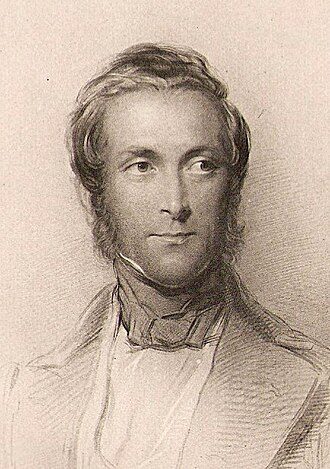
Lord Dalhousie
Governor-General of India from 1848 to 1856 who annexed the Punjab on 29 March 1849, ending the Sikh state of Maharaja Ranjit Singh and deposing the child Maharaja Duleep Singh.
James Andrew Broun Ramsay, 1st Marquess of Dalhousie, was Governor-General of India from 12 January 1848 to 28 February 1856. He annexed the Punjab on 29 March 1849 and ended the Sikh state built by Maharaja Ranjit Singh. He was born at Dalhousie Castle on 22 April 1812 and died on 19 December 1860.
Key moments
- 1848: soon after he arrives, Mul Raj, the Sikh governor of Multan, revolts. The Encyclopaedia of Sikhism, in an entry by the historian B. J. Hasrat, says this was a local affair that could have been put down at once, that Dalhousie's own papers show an early advance on Multan was neither dangerous nor impracticable, and that he delayed action for five months so that the trouble would spread and give the British an excuse to annex the Punjab. He then began to call it a national rising of the Sikhs and declared that the die was cast.
- A speech of his, quoted by Wikipedia from Lawrence James's Raj, said the Sikh nation had called for war and would have it "with a vengeance".
- November 1848 to February 1849: the British invade under Lord Gough. The main battles are Ramnagar on 22 November 1848, Chillianwala on 13 January 1849 and Gujrat on 21 February 1849.
- 29 March 1849: the Punjab is annexed. The Encyclopaedia says that opinion in England was against annexation, and that the cabinet had told the Governor-General to report the opinion of the Government of India, but he forestalled both the Secret Committee and the India Board and took the step on his own responsibility.
- The boy Maharaja Duleep Singh, about ten years old, loses his crown. He is taken to Fatehgarh in 1850, baptised a Christian on 8 March 1853 and sails for England in April 1854 (Encyclopaedia of Sikhism).
- The Koh-i-Noor: Article III of the 1849 treaty required that the diamond be surrendered to the Queen of England. Dalhousie oversaw the treaty's ratification, and some contemporaries criticised how he helped transfer the diamond, treating it as spoil of war. It was presented to Queen Victoria on 3 July 1850 and shown at the Great Exhibition in 1851 (Wikipedia).
Elsewhere in India. Dalhousie also pressed the Doctrine of Lapse, under which states without a natural heir passed to the Company. Wikipedia names Satara, Jaitpur, Sambalpur, Jhansi and Nagpur among them. He built railways, a telegraph and a uniform postal system, which he called the three great engines of social improvement.
What he is remembered for: in Sikh history, as the Governor-General who ended the Khalsa Raj and took a child king's crown and the Koh-i-Noor. In British accounts, as an energetic administrator of railways, telegraphs and posts.
Sources
- Dalhousie, James Andrew Broun Ramsay, First Marquis of (1812-1860), The Encyclopaedia of Sikhism (ed. Harbans Singh), Punjabi University, Patiala. eos.learnpunjabi.org
- Duleep Singh, Maharaja (1838-1893), The Encyclopaedia of Sikhism (ed. Harbans Singh), Punjabi University, Patiala. eos.learnpunjabi.org
- James Broun-Ramsay, 1st Marquess of Dalhousie, Wikipedia (used for his dates in office, the war speech and the public works). en.wikipedia.org
- Koh-i-Noor, Wikipedia (used for Article III of the 1849 treaty and the diamond's voyage). en.wikipedia.org