Person
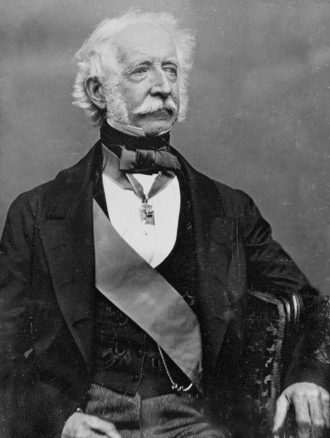
Hugh Gough
British Commander-in-Chief in India from 1843 to 1849, who led the East India Company army against the Khalsa Army at Mudki, Ferozeshah and Sobraon, then at Chillianwala and Gujrat.
Hugh Gough, an Anglo-Irish soldier, was the Company's Commander-in-Chief in India from August 1843 and the general under whom the Khalsa Army was beaten in both Anglo-Sikh wars. He was Sir Hugh Gough in the first war, Baron Gough from April 1846 and Viscount Gough from June 1849. His method, as the Encyclopaedia of Sikhism and the Dictionary of National Biography describe it, was the frontal infantry assault, which cost his own army heavily and drew public criticism at home as "Tipperary tactics".
Key moments
- Born 3 November 1779 in County Limerick; joined the army in 1793, fought in the Peninsular War and commanded British forces in China during the First Opium War.
- 18 December 1845, Mudki: the first battle of the First Anglo-Sikh War; the Encyclopaedia counts 872 British killed and wounded.
- 21 to 22 December 1845, Ferozeshah: Gough and Governor-General Hardinge attacked the Sikh entrenchments. The Encyclopaedia gives British losses of 694 killed and 1,721 wounded, and says the desertions of Lal Singh and Tej Singh turned a near defeat into a British victory. Gough admitted the army had been in a critical and perilous state.
- 10 February 1846, Sobraon: another frontal attack on an entrenched army pinned against the flooded Sutlej. The Encyclopaedia puts British losses at 2,403 and Sikh losses at 3,125. Gough was made Baron Gough in April 1846; the Treaty of 9 March stripped the Lahore Darbar of the Jalandhar Doab and imposed an indemnity and army limits.
- 13 January 1849, Chillianwala: heavy British losses, including four guns, in jungle. Gough claimed victory; Governor-General Dalhousie called it perhaps poetical. It was decided in England to replace him with Sir Charles Napier.
- 21 February 1849, Gujrat: the battle of guns. The Encyclopaedia estimates Sikh losses at 3,000 to 5,000 men and 53 guns, against British losses of 96 killed and 700 wounded. The Sikh army surrendered by 14 March and Dalhousie proclaimed the annexation of the Punjab on 29 March.
- Napier arrived and Gough gave up the command on 7 May 1849. He became a Viscount in June 1849, a field marshal in November 1862, and died on 2 March 1869 at St Helens, Booterstown, near Dublin.
Remembered for: winning the wars that ended the Sikh kingdom, at a price that shocked British opinion, and for the criticism that his tactics wasted lives.
Sources
- Anglo-Sikh War I (1845-46), Encyclopaedia of Sikhism, Punjabi University Patiala. eos.learnpunjabi.org
- Anglo-Sikh War II (1848-49), Encyclopaedia of Sikhism, Punjabi University Patiala. eos.learnpunjabi.org
- Gough, Hugh, Dictionary of National Biography, 1885-1900 (Wikisource). en.wikisource.org
- Hugh Gough, 1st Viscount Gough, Wikipedia (used for his birth, early career, peerages and later honours). en.wikipedia.org