Person
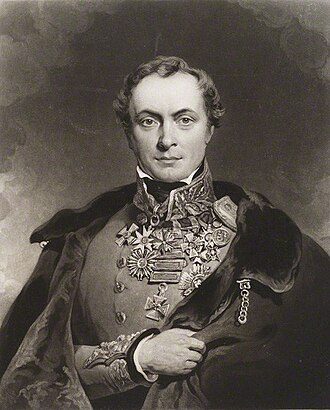
Henry Hardinge, Viscount Hardinge
Governor-General of India 1844 to 1848. He took the field in the First Anglo-Sikh War, overruled Gough at Ferozeshah and imposed the Treaty of Lahore that stripped the Darbar of its richest lands.
Henry Hardinge, 1st Viscount Hardinge (1785 to 1856), was Governor-General of India from 1844 to 1848 and the British head of the war that broke the Khalsa army in 1845 and 1846. Born at Wrotham in Kent, he fought in the Peninsular War and lost his left hand at Ligny on 16 June 1815. He was twice Secretary at War and served as Chief Secretary for Ireland before going to India.
His part in this history is that of the Governor-General under whom the Lahore Darbar lost its richest provinces and its freedom of action. Anger at the British interference that followed fed the Second Anglo-Sikh War and the annexation of 1849.
Key moments
- 11 to 18 December 1845: the Khalsa crossed the Sutlej on 11 December and the British treated it as war. Hardinge, the senior civil officer, placed himself under the Commander-in-Chief, Sir Hugh Gough, in the field, and commanded the left flank at Mudki on 18 December.
- 21 to 22 December 1845: at Ferozeshah, Gough wanted to attack at once. Hardinge used his higher office to overrule him and wait for reinforcements from Ferozepore. Wikipedia adds that he expected defeat the next day and ordered state papers at Mudki burned. The British won, at heavy cost.
- 10 February 1846: at Sobraon the British broke the entrenched Sikh position. The National Army Museum says the Sikhs may have lost up to 10,000 men, many drowned crossing the Sutlej after the bridges were destroyed, possibly deliberately by the commander Tej Singh, who had left the field.
- 9 March 1846: the Treaty of Lahore, signed by the boy Maharaja Duleep Singh. The Darbar gave up the Jullundur Doab and owed an indemnity of Rs 1.5 crore. Unable to pay, it ceded Kashmir, Hazara and the hill lands between the Beas and Indus, valued at Rs 1 crore. Henry Lawrence became British Resident at Lahore with a large garrison. On 16 March the Treaty of Amritsar sold Kashmir to Gulab Singh of Jammu for Rs 75 lakh.
- 16 December 1846: the Treaty of Bhairowal gave the Resident and a Council of Regency effective control of the government and gave Maharani Jind Kaur a pension of Rs 150,000.
Hardinge was created a viscount in 1846. He later succeeded the Duke of Wellington as Commander-in-Chief on 28 September 1852, directed the British side of the Crimean War, resigned in July 1856 and died on 24 September 1856.
Remembered for: being, in the Sikh record, the Governor-General who dismantled the state Maharaja Ranjit Singh built. Within three years of his settlement the Punjab was annexed.
Sources
- Henry Hardinge, 1st Viscount Hardinge, Wikipedia. en.wikipedia.org
- First Anglo-Sikh War, Wikipedia. en.wikipedia.org
- First Sikh War, National Army Museum, London. nam.ac.uk
- Anglo Sikh Treaties project: Treaty of Lahore, 9 March 1846, Sikh Museum Initiative. sikhmuseum.org.uk