Person
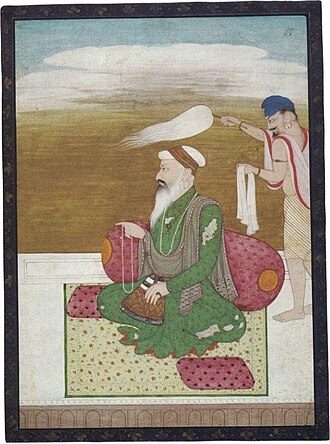
Guru Ram Das Ji
Fourth Guru (1574 to 1581). He founded Ramdaspur, later Amritsar, built the pool around Harmandar Sahib and composed the Lavan sung at every Sikh wedding.
Guru Ram Das Ji was the fourth Guru of the Sikhs, in the line of Guru Nanak, Guru Angad and Guru Amar Das. He carried the Guru's light from 1574 until his death in 1581, and he founded the city of Amritsar.
He was born Jetha on 24 September 1534 at Chuna Mandi in Lahore, to Hari Das and Anup Devi, of the Sodhi family. He lost both parents at seven and was brought up by his grandmother in her village, Basarke. The Encyclopaedia does not say which grandmother she was; Wikipedia and SikhNet's life portrait say his maternal grandmother. He sold boiled grain in the market and, people said, often gave his food away to the hungry. At twelve he went to Goindval and settled there. Guru Amar Das gave him his daughter, Bibi Bhani, in marriage on 18 February 1554, and the couple stayed at Goindval to be near the Guru. Their three sons were Prithi Chand, Mahadev and Arjan Dev. The Encyclopaedia of Sikhism records that Guru Amar Das once sent him to Lahore to answer, before Emperor Akbar, the complaint of the Brahmans that the free kitchen ignored caste. His plain reply that all are equal in the eyes of God pleased Akbar, who dismissed the charge.
Key moments
- 1574: Guru Amar Das, who died on 1 September that year, had chosen Jetha, by then called Ram Das, to carry on the light of Nanak.
- The town: Guru Amar Das had told him to found a town around a pool, about 40 km north-west of Goindval. The Encyclopaedia gives two accounts of how the land was got. One, from the Amritsar District Gazetteer, says 500 bighas were bought from the landowners of Tung for 700 Akbari rupees. The other says Akbar offered the land to Guru Amar Das, who refused, so it was given to Bibi Bhani, who gave it to the growing Sikh community. The place was called Guru ka Chakk, then Ramdaspur, then Amritsar, "pool of nectar".
- Building it: he invited merchants and artisans from distant places to settle. To pay for the pool and the langar he organised masands to collect offerings, and he sent Bhai Gurdas to teach in Agra.
- 1580 to 1581: he chose his youngest son, Arjan Dev, as the next Guru, after letters from Arjan Dev in Lahore, which Prithi Chand had held back, finally reached him. He then retired to Goindval and died there on 1 September 1581.
He is remembered as the founder of Amritsar and as a poet. The Guru Granth Sahib holds 638 of his hymns in 30 ragas. The best known is the Lavan, four stanzas sung as the couple walk around the Guru Granth Sahib at every Sikh wedding, the Anand Karaj. The Encyclopaedia notes that another of his hymns defines a Sikh by what a Sikh does, not by birth, status or belief. Gurdwara Janam Asthan at Chuna Mandi marks his birthplace, and Amritsar is still called Guru Ram Das di Nagri, the city of Guru Ram Das.
Sources
- Ram Das, Guru (1534-1581), The Encyclopaedia of Sikhism (ed. Harbans Singh), Punjabi University, Patiala (entry by G. S. Mansukhani). eos.learnpunjabi.org
- Guru Ram Das Ji's Brief Life Portrait (cited only for the maternal grandmother), SikhNet. sikhnet.com
- Guru Ram Das (cited only for the maternal grandmother), Wikipedia. en.wikipedia.org