Person
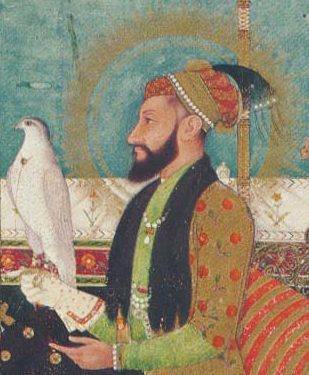
Aurangzeb
Sixth Mughal emperor (1658 to 1707), under whose rule Guru Tegh Bahadur was executed in 1675 and to whom Guru Gobind Singh addressed the Zafarnamah.
Aurangzeb took the throne of Delhi on 21 July 1658, after winning the war of succession at Samugarh near Agra. The Encyclopaedia of Sikhism calls him the last of the great Mughal emperors, a pious man and an orthodox Muslim whose religious policy hardened over time. In 1669 he ordered provincial governors to destroy the schools and temples of non-Muslims, and in 1679 he imposed the jizyah, a tax on non-Muslims. The Encyclopaedia says the Sikh order had to bear the brunt of this intolerance.
Key moments in Sikh history
- 1658 to 1664: after Dara Shukoh met Guru Har Rai at Goindwal, officials told Aurangzeb the Guru was a rebel and he summoned him to Delhi. Later he summoned the child Guru Har Krishan, who died of smallpox in Delhi on 30 March 1664.
- 1675: Kashmiri Pandits came to Guru Tegh Bahadur at Anandpur on 25 May 1675, complaining of forcible conversions by the emperor's governor. The Encyclopaedia says Aurangzeb issued orders for the Guru's arrest. The Guru was beheaded in public in Chandni Chowk, Delhi, on 11 November 1675, after Bhai Dayal Das, Bhai Mati Das and Bhai Sati Das had been tortured to death before his eyes.
- 1691: after the battle of Nadaun on 20 March, Aurangzeb ordered his faujdars in Punjab to stop Guru Gobind Singh holding assemblies of Sikhs.
- December 1705: the hill chiefs, aided by Mughal troops from Lahore and Sirhind, besieged Anandpur and forced the Guru out on 5 and 6 December. The Encyclopaedia of Sikhism gives 1705, though some accounts date these events a year earlier. The Guru's two elder sons fell at Chamkaur and his two younger sons were executed at Sirhind.
- 1706: from Dina the Guru sent Aurangzeb the Zafarnamah, a letter in Persian verse that accuses him of breaking faith after solemn assurances of safe passage and argues that morality is supreme over state power.
- 20 February 1707: Aurangzeb died. According to the Ahkam-i-Alamgiri, as the Encyclopaedia reports it, he had just ordered the deputy governor of Lahore to make peace with the Guru and had invited him to meet. The Guru could not reach him before he died.
What he is remembered for: in Sikh memory he is the emperor in whose reign the Ninth Guru was executed and the Tenth Guru's family was lost, and the Khalsa was created at Anandpur in 1699 during his rule. The Encyclopaedia's account also keeps the late sign of a different approach, the invitation to meet the Guru, so the record is not one note.
Sources
- Aurangzib Muhi ud-Din Muhammad Alamgir (1618-1707), The Encyclopaedia of Sikhism (ed. Harbans Singh), Punjabi University, Patiala. eos.learnpunjabi.org
- Tegh Bahadur, Guru (1621-1675), The Encyclopaedia of Sikhism (ed. Harbans Singh), Punjabi University, Patiala. eos.learnpunjabi.org
- Zafarnamah, The Encyclopaedia of Sikhism (ed. Harbans Singh), Punjabi University, Patiala. eos.learnpunjabi.org