Person
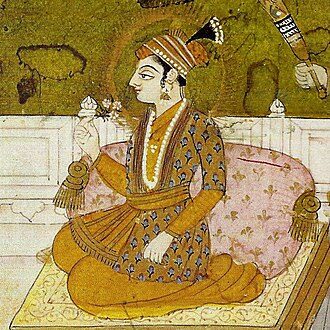
Guru Har Krishan Sahib Ji
Eighth Guru of the Sikhs. Became Guru at five, nursed the sick of Delhi in the 1664 smallpox epidemic, and died of the disease on 30 March 1664. Bangla Sahib marks where he stayed.
Guru Har Krishan Sahib Ji was the eighth Guru of the Sikhs. He was born on 7 July 1656 at Kiratpur, in the Shivalik foothills, the son of Guru Har Rai Ji and Mata Sulakkhani. His father chose the five-year-old as his successor, and he took up the Guruship on 6 October 1661, the day his father died. His elder brother Ram Rai, who had been passed over, complained to Emperor Aurangzeb.
Aurangzeb summoned the young Guru to Delhi through Raja Jai Singh of Amber, and he stayed in Raja Jai Singh's bungalow in the city. Accounts differ on whether he met the emperor. The Encyclopaedia of Sikhism describes a court visit on 25 March 1664 in which the Guru declined to perform a miracle, while ThePrint says he avoided Aurangzeb's court.
Smallpox, and according to ThePrint cholera as well, was then raging in Delhi. The Guru went out to nurse the sick and caught smallpox himself. ThePrint says he tended people regardless of faith, which earned him the name Bala Pir (the child saint), and that water from the tank at the bungalow is revered as having cured thousands. He was moved to a camp on the bank of the Yamuna and died on 30 March 1664, before his eighth birthday. The Sikh Missionary Society records that he was cremated on the river bank, where Gurdwara Bala Sahib was built.
When he was asked who would follow him, he could say only "Baba Bakale", meaning that the next Guru would be found at Bakala. Several men set themselves up as Guru there. The trader Makhan Shah Lubana searched among them and found Tegh Bahadur living in seclusion, and Guru Tegh Bahadur Ji was formally anointed on 11 August 1664.
Key moments
- 7 July 1656: born at Kiratpur.
- 6 October 1661: becomes Guru at the age of five.
- March 1664: in Delhi, at Raja Jai Singh's bungalow, during the smallpox epidemic.
- 30 March 1664: dies of smallpox.
- 11 August 1664: Guru Tegh Bahadur Ji is anointed at Bakala.
How he is remembered. He is remembered as the child Guru who gave his life nursing others. Gurdwara Bangla Sahib in Delhi stands where he stayed, and ThePrint records that Baghel Singh built it in 1783 among a series of Delhi gurdwaras marking the Gurus' visits. Its sarovar is still revered.
Sources
- Har Krishan, Guru (1656-1664), Encyclopaedia of Sikhism (Punjabi University, Patiala). eos.learnpunjabi.org
- Guru Tegh Bahadur (1621-1675), Encyclopaedia of Sikhism (Punjabi University, Patiala). eos.learnpunjabi.org
- Guru Har Krishan, Sikh Missionary Society. sikhmissionarysociety.org
- Bangla Sahib: the 17th century haveli turned gurdwara has sheltered Delhi through every crisis, ThePrint. theprint.in