Person
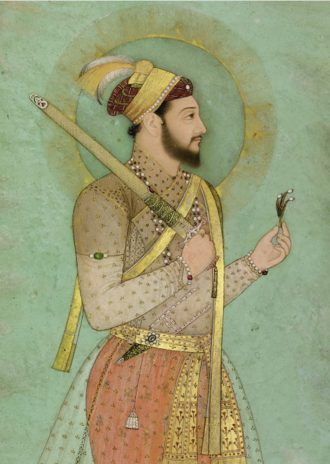
Dara Shikoh
Mughal heir apparent and Sufi-minded scholar who met Guru Har Rai at Goindval in June 1658 while fleeing Aurangzeb; he was executed in Delhi on 30 August 1659.
Dara Shikoh, also written Dara Shukoh, was the eldest son and chosen heir of Emperor Shah Jahan. He was born in 1615. Haroon Khalid writes in Scroll that he was governor of Lahore from 1646 to 1657. He is remembered as a scholar of Sufi and Vedantic thought: his Majma-ul-Bahrain sets the two traditions side by side, and he translated about fifty Upanishads from Sanskrit into Persian. The Encyclopaedia of Sikhism calls him liberal in religious outlook and an admirer of the Sufi Mian Mir.
Key moments
- Sikh tradition, as the Encyclopaedia records it, holds that Guru Har Rai once cured Dara of a serious illness with herbs he sent, and that Dara later sought an audience with him during another illness.
- 29 May 1658: Aurangzeb beat him at Samugarh in the war of succession (some accounts say 30 May). Dara fled into the Punjab.
- Last week of June 1658: he reached Goindval and met Guru Har Rai, asking for his blessing and consolation. According to the Mahima Prakash, the Guru posted his own troops at a ferry to delay Aurangzeb’s army as it pursued Dara.
- Dara fled on to Gujarat and Sindh, was betrayed and handed to Aurangzeb, and was brought to Delhi in chains. Aurangzeb called nobles and clergy, who declared him an apostate. The official history, the Maathir-i-Alamgiri, said his views were a threat to Islam and the state.
- 30 August 1659: he was beheaded on Aurangzeb’s orders.
- 1661: Aurangzeb’s officials had told him the Guru was a rebel who had helped Dara. He had Raja Jai Singh of Amber summon the Guru to Delhi. The summons reached Kiratpur on Baisakhi 1661, and the Guru sent his elder son Ram Rai in his place.
What he is remembered for: In Mughal history, as the heir who lost, and as the prince who put Hindu and Sufi texts side by side. In Sikh history, as the prince who sought Guru Har Rai’s blessing on the run. Mir Mohammad Ali Talpur describes the verdict of apostasy as politically motivated, and Nighat Gandhi writes that Dara never renounced Islam. Outlook notes that Dara is often painted as the gentler brother of Aurangzeb, a picture historians dispute, and that Bernier described him as short-tempered and arrogant to critics. The Delhi grave in Humayun’s Tomb is the burial place historians broadly accept, though the exact spot is still argued over.
Sources
- HAR RAI, GURU (1630-1661), The Encyclopaedia of Sikhism (Punjabi University, Patiala). eos.learnpunjabi.org
- Lahore’s iconic mosque stood witness to two historic moments where tolerance gave way to brutality (Haroon Khalid, 26 Aug 2016), Scroll.in. scroll.in
- Dara Shikoh: still persecuted (Mir Mohammad Ali Talpur, 1 Aug 2010), The Daily Times, reproduced by APNA. apnaorg.com
- In a time of blasphemies (Nighat Gandhi, 28 Jun 2013), The Daily Star. thedailystar.net
- How a Delhi engineer dug out Dara Shikoh’s grave, Outlook India. outlookindia.com
- Dara Shikoh (used only for the birth year and the date of the execution), Wikipedia. en.wikipedia.org