Person
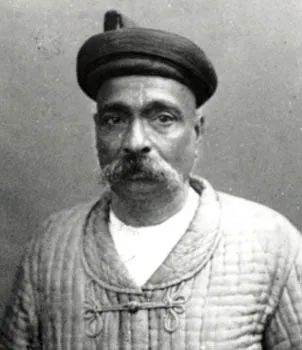
Bal Gangadhar Tilak
Maharashtrian nationalist jailed for sedition in 1897 and 1908 who declared swaraj his birthright; partner of Lala Lajpat Rai in the Lal-Bal-Pal trio and co-signer of the Lucknow Pact.
Bal Gangadhar Tilak (23 July 1856 to 1 August 1920) was the leader of the extremist wing of the Indian National Congress and the best known Indian nationalist of his day, remembered for the line that swaraj is his birthright. He worked in Maharashtra, not Punjab. He belongs in this record because he stood beside Lala Lajpat Rai of Punjab in the Lal-Bal-Pal trio and because he signed the Lucknow Pact of 1916 with Jinnah, under which, as Sundar Singh Majithia read it, Punjab's Muslims received half the communal seats with no Sikh party to it.
He was born at Ratnagiri and educated at Deccan College, Poona, taking a BA in mathematics in 1877 and an LLB in 1879. In 1880 and 1881 he started two papers, the Marathi Kesari and the English Mahratta. In 1894 he turned the household worship of Ganesha into a public festival, and in 1895 he founded a committee for the birthday celebration of Shivaji.
Key moments
- 1897: convicted of sedition and sentenced to 18 months, according to Scroll, which says it earned him the title Lokmanya, "beloved leader of the people". Wikipedia glosses the title as "accepted by the people as their leader". ThePrint gives the sentence as one year. ThePrint says the case turned on two Kesari articles about Shivaji and Afzal Khan that the British said incited the killings of Rand and Ayerst.
- 1907: at the Surat session the Congress split, with a radical faction led by Tilak, Bipin Chandra Pal and Lajpat Rai against a moderate faction.
- 1908: after Khudiram Bose and Prafulla Chaki killed two European women, he was tried again for sedition over his Kesari articles. Muhammad Ali Jinnah defended him, but the court refused bail, and Tilak argued his own defence. He was sentenced to six years in Mandalay, Burma, and wrote the Gita Rahasya there. At the trial, Scroll says, he declared that swaraj was his birthright.
- 1916: he founded his own Indian Home Rule League at Belgaum in April, for Maharashtra outside Bombay city, Karnataka, the Central Provinces and Berar. Annie Besant founded a second league at Adyar, Madras, in September, for the rest of India (Wikipedia, on the Indian Home Rule movement). Wikipedia's article on Tilak says he helped found the All India Home Rule League in 1916 to 1918 with Besant and G. S. Khaparde. Jinnah defended him in a third sedition case and won his acquittal, and the two signed the Lucknow Pact. Dawn describes the Jinnah-Tilak friendship as a cornerstone of Hindu-Muslim unity before Partition.
- 1 August 1920: he died at Bombay. Sudheendra Kulkarni writes in Scroll that over a million people attended the funeral at Chowpatty, and that Gandhi, Nehru and Shaukat Ali were among the pall-bearers.
The Punjab and Sikh link: according to the Encyclopaedia of Sikhism, Sikhs were not party to the Lucknow Pact, and Sundar Singh Majithia read it as giving Muslims 50 per cent of Punjab's communal seats. The Government of India Act 1919 later gave Sikhs communal electorates in the province.
What he is remembered for: swaraj, the Kesari, and the Mandalay sentence. His critics, including leftist and Ambedkarite writers, call him a Hindu nationalist and an opponent of social reform. Kulkarni answers that he took part in Muharram processions, pressed for Hindu-Muslim unity and condemned untouchability, while granting that some of his early writing on caste was conservative.
Sources
- On Lokmanya Tilak's death centenary, it's time to re-examine his legacy (Sudheendra Kulkarni, 1 August 2020), Scroll.in. scroll.in
- Two Kesari texts, Jinnah's defence, Marathi sympathy: when Tilak took stand against sedition, ThePrint. theprint.in
- Jinnah, Tilak and Indian independence movement, Dawn. dawn.com
- Communal Award, The Encyclopaedia of Sikhism (ed. Harbans Singh), Punjabi University, Patiala. eos.learnpunjabi.org
- Bal Gangadhar Tilak (used for his education, papers, festivals, the Surat split and the Home Rule League, where no better source loaded), Wikipedia. en.wikipedia.org
- Indian Home Rule movement (Tilak's league at Belgaum, April 1916; Besant's at Adyar, September 1916), Wikipedia. en.wikipedia.org