Person
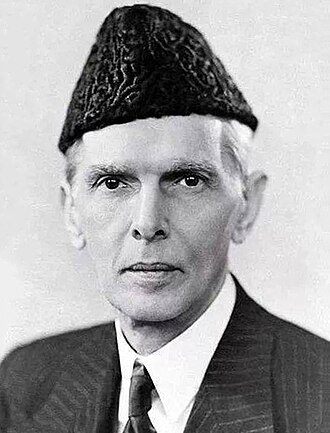
Muhammad Ali Jinnah
Leader of the All-India Muslim League and first Governor-General of Pakistan, whose demand for Pakistan put the Punjab and the Sikhs at the centre of Partition in 1947.
Muhammad Ali Jinnah led the All-India Muslim League and is honoured in Pakistan as its founding father, the Quaid-i-Azam, or great leader. Born in Karachi in 1876, he qualified as a barrister at Lincoln's Inn, joined the Indian National Congress in 1906 and the Muslim League in 1912, and helped bring about the Lucknow Pact between the two in 1916. He became the first Governor-General of Pakistan after 14 August 1947 and died in Karachi on 11 September 1948. For the Sikhs, his demand for Pakistan put the Punjab, their homeland, at the centre of Partition.
Key moments
- March 1940: the League under Jinnah passed the Pakistan Resolution at Lahore. The Encyclopaedia of Sikhism says Sikhs viewed it with alarm, fearing a permanent minority place in a Muslim state, while any partition of the Punjab would also split the Sikh community.
- 1944: Jinnah rejected the offer, carried by Rajagopalachari with Gandhi's backing, of a smaller Pakistan of contiguous Muslim-majority areas, calling it a mutilated and moth-eaten Pakistan.
- 2 April 1946: Jinnah met Sikh leaders privately in Delhi at the house of Sir Teja Singh Malik, with Master Tara Singh among them. Harbans Singh, in Heritage of the Sikhs, as quoted by All About Sikhs, writes that Jinnah held out allurements, including an autonomous Sikh area within Pakistan, and gave assurances without specifics. A Tribune commentary likewise says the Akali leadership rejected Jinnah's offer to join Pakistan.
- 1946: Master Tara Singh told the Cabinet Mission that if Pakistan were conceded the Sikhs wanted a separate state. The League won nearly all Muslim seats in the 1945 to 1946 elections, including 79 in the Punjab, and on 29 July 1946 authorised direct action for Pakistan.
- March 1947: Sikhs in Rawalpindi and Attock districts were attacked by Muslim mobs, which, the Encyclopaedia says, convinced many Sikhs to avoid Muslim rule. On 3 March Master Tara Singh shouted "Death to Pakistan" at Lahore, and the disturbances that followed made Sikhs a special target. The Encyclopaedia's verdict is that Sikh hopes of concessions from the League proved illusory.
- 3 June 1947: Jinnah, Nehru and Baldev Singh for the Sikhs agreed to the Mountbatten plan. The Punjab was divided. The Encyclopaedia estimates about 3.5 million Hindus and Sikhs moved from West Punjab and about 5 million Muslims from East Punjab, with deaths estimated at between 200,000 and 1,000,000.
What he is remembered for. In Pakistan he is remembered as the founder of the state. In Sikh history he is remembered as the leader whose demand for Pakistan, and the offers that came with it, forced the Panth to choose in 1946 and 1947, and whose partition, the Encyclopaedia says, hit the Sikhs hardest.
Sources
- A life sketch of Jinnah, The News International. thenews.com.pk
- Jinnah, the Quaid-i-Azam (141st birthday, 25 December 2017), Dawn. dawn.com
- Partition of the Punjab (1947) (entry by Penderel Moon), The Encyclopaedia of Sikhism (ed. Harbans Singh), Punjabi University, Patiala. eos.learnpunjabi.org
- Tara Singh, Master (1885-1967) (entry by Baldev Raj Nayar), The Encyclopaedia of Sikhism (ed. Harbans Singh), Punjabi University, Patiala. eos.learnpunjabi.org
- Master Tara Singh (quoting Harbans Singh, Heritage of the Sikhs), All About Sikhs. allaboutsikhs.com
- Badal shaped Punjab's political trajectory, The Tribune. tribuneindia.com