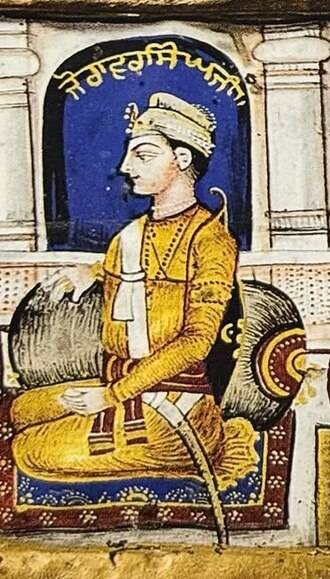
Sahibzada Baba Zorawar Singh Ji
ਸਾਹਿਬਜ਼ਾਦਾ ਬਾਬਾ ਜ਼ੋਰਾਵਰ ਸਿੰਘ ਜੀ
Third son of Guru Gobind Singh, born at Anandpur in 1696; at nine he refused to give up his faith before Wazir Khan at Sirhind and was put to death with his brother Fateh Singh.
Sahibzada Baba Zorawar Singh was the third son of Guru Gobind Singh. The Encyclopaedia of Sikhism says he was born to Mata Jito at Anandpur on 17 November 1696, and he was barely nine at the time of the evacuation of Anandpur on the night of 5 to 6 December 1705. After his mother died on 5 December 1700, his grandmother Mata Gujri became especially attached to him and to his infant brother Fateh Singh, and she took charge of both as the column moved out of Anandpur.
While they crossed the Sarsa on horseback, the stream in spate, the three were separated from the Guru. Their cook, Gangu, who had also crossed, took them to his own house in the village of Kheri, now Saheri, near Morinda. While unsaddling the horse he saw cash in the saddlebag. This tempted him to treachery: he stole the bag in the night and planned to betray the fugitives for a reward.
Key moments
- 7 December 1705, the day of the battle of Chamkaur: Jani Khan and Mani Khan Ranghar, officials at Morinda, took Zorawar Singh, Fateh Singh and Mata Gujri into custody. The next day they were sent to Sirhind and put in the Thanda Burj. The Encyclopaedia's Gujari entry instead says they were arrested on 8 December and confined in Sirhind Fort.
- 9 December: the two boys were brought before the faujdar, Nawab Wazir Khan, who had just returned from Chamkaur with his ally Nawab Sher Muhammad Khan of Malerkotla. Wazir Khan tried to lure them to Islam with riches and honours, then threatened them with death. They stood firm, and a death sentence was pronounced. Sher Muhammad Khan interceded for the children, so they were given more time and spent two more winter days in their grandmother's lap.
- 11 December: still unmoved, they were ordered sealed alive in a wall. By tradition the masonry crumbled at chest height (Zorawar Singh entry), before it covered their heads (Gujari entry), and they were sent back to the Tower.
- 12 December: they turned down the choice of conversion again and were executed. Mata Gujri died as the news reached her. Seth Todar Mall cremated all three on 13 December.
The site, since named Fatehgarh Sahib, close to the old town of Sirhind, is now marked by four Sikh shrines, and a fair is held there from 25 to 28 December each year to honour the martyrs. The Encyclopaedia's dates run from 7 to 13 December 1705. Other accounts give different days and years for the capture and the execution, and the Sikh commemoration falls in late December. The entry on the Sirhind martyrdoms discusses the disagreement.
Zorawar Singh and Fateh Singh are remembered together as the younger Sahibzade of Guru Gobind Singh, whose martyrdom in childhood the Panth commemorates every year.
Back to ThreadsSee its threads
Sources
- ZORAWAR SINGH (1696-1705), The Encyclopaedia of Sikhism (Punjabi University, Patiala). eos.learnpunjabi.org
- FATEH SINGH, SAHIBZADA (1699-1705), The Encyclopaedia of Sikhism (Punjabi University, Patiala). eos.learnpunjabi.org
- Shaheedi Jor Mela begins in Fatehgarh Sahib today, The Tribune (24 December 2021). tribuneindia.com
- Saka Sirhind, Wikipedia (cited only for the differing dates). en.wikipedia.org
- Gujari, Mata, The Encyclopaedia of Sikhism (ed. Harbans Singh), Punjabi University, Patiala (web edition at thesikhencyclopedia.com). thesikhencyclopedia.com