Person
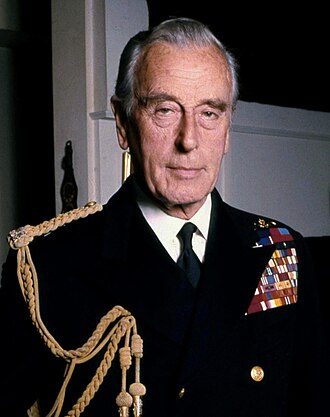
Lord Louis Mountbatten
Last Viceroy of India, who announced the 3 June 1947 plan, brought independence forward to 15 August 1947 and so presided over the partition of Punjab and the division of the Sikhs.
Louis Mountbatten, later the 1st Earl Mountbatten of Burma, was a Royal Navy officer and member of the British royal family who was sent to India as the last Viceroy. Born on 25 June 1900, he had been Supreme Allied Commander in South East Asia. Prime Minister Attlee's government named him Viceroy on 20 February 1947 and told him to transfer power no later than June 1948. He reached India on 22 March and took the oath two days later.
Key moments for Punjab and the Sikhs
- 3 June 1947: he announced the plan to divide Punjab and Bengal. The Encyclopaedia of Sikhism says Nehru, Jinnah and, for the Sikhs, Sardar Baldev Singh gave their consent, and that Master Tara Singh's Akali Dal had opposed partition but accepted it rather than see the whole community engulfed in Pakistan. The next day he said power would pass by 15 August, about ten months before the June 1948 deadline he had been given.
- After the plan, the Punjab Assembly's eastern part voted 50 to 22 for partition. The Boundary Commission under Sir Cyril Radcliffe, who reached India on 8 July and was given five weeks, divided so sharply that the award was Radcliffe's alone.
- August 1947: a Punjab Boundary Force of over 50,000 troops was formed for twelve districts of central Punjab. The Encyclopaedia says the killing far exceeded what was expected and the Force, broken up on 31 August, could only slightly check it.
- 17 August 1947: Radcliffe's line was published, two days after independence. The Encyclopaedia says partition would leave about two million Sikhs on the Pakistan side. It gives casualty estimates of 200,000 to 1,000,000, the lower figure probably nearest the truth, and says about 3.5 million Hindus and Sikhs moved east from West Punjab and five million Muslims west.
- 15 August 1947 to 21 June 1948: he served as the first Governor-General of independent India, persuaded most princely states to accede and advised taking the Kashmir dispute to the United Nations in January 1948.
- 27 August 1979: he was killed by a Provisional IRA bomb on his boat off Mullaghmore, in County Sligo.
Remembered for: the speed of the transfer. Wikipedia says his record is regarded as very mixed. One common view, voiced harshly by the economist John Kenneth Galbraith, is that he hastened independence recklessly and so helped bring about the violence, especially in Punjab and Bengal. Another, put by the historian Lawrence James, is that Britain had no option but to leave quickly to avoid being drawn into civil war.
Sources
- PARTITION OF THE PUNJAB (1947), The Encyclopaedia of Sikhism (Punjabi University, Patiala). eos.learnpunjabi.org
- Louis Mountbatten, 1st Earl Mountbatten of Burma, Wikipedia (appointment, the oath, his later posts and the assessments of his record). en.wikipedia.org
- Radcliffe Line, Wikipedia (Radcliffe's five weeks and the 17 August publication). en.wikipedia.org
- Assassination of Lord Mountbatten, Wikipedia. en.wikipedia.org