Person
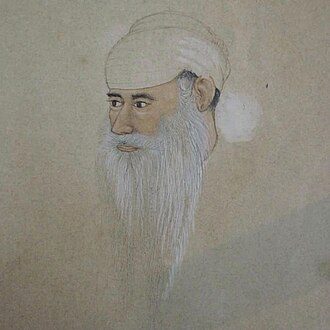
Baba Ram Singh Namdhari
Leader of the Namdhari (Kuka) movement from Bhaini Sahib: a former Khalsa Army soldier who set its code in 1857, led a boycott of British rule, and was exiled to Burma in 1872.
Baba Ram Singh, whom the Namdharis revere as Satguru Ram Singh, was born on 3 February 1816 at Bhaini Araian in Ludhiana district, the eldest of four children of Jassa Singh and Sada Kaur. At about twenty he joined the army of Maharaja Ranjit Singh, serving in Kanwar Nau Nihal Singh's regiment. In 1841, when the regiment moved to Peshawar, he met Baba Balak Singh, whom the Namdharis count as the Guru before Ram Singh. After the First Anglo-Sikh War he resigned and went home to Bhaini, where he farmed, kept a grocery shop and briefly worked as a building contractor in 1855 and 1856.
Namdhari tradition traces the movement to Balak Singh, and Ram Singh gave it its code and its organisation. On Baisakhi in April 1857 he set out a code of conduct for his followers. They were to avoid meat and intoxicants, not worship at tombs, and live simply and chastely. The movement was known for ecstatic chanting, which is the source of the name Kuka (from kuk, a cry). It ran on a missionary chain of regional heads (subas), group leaders and village scripture-readers. It also declared a boycott of British rule: of British goods, government schools and service, the courts and the post office, and it promoted homespun cloth.
Key moments
- 1841: meets Baba Balak Singh.
- Baisakhi, April 1857: sets out the code that shaped the Namdhari community.
- 15 January 1872: more than a hundred Kukas attack Malerkotla. The Encyclopaedia of Sikhism says they attacked the treasury and that eight policemen died; other accounts say they attacked butchers and a slaughterhouse.
- 17 January 1872: the captured Kukas are blown from guns without trial. The Encyclopaedia of Sikhism counts sixty-eight; other accounts give 65 to 67.
- 1872: Ram Singh is exiled from Punjab with ten of his subas, taken to Allahabad and then to Rangoon, and held under the Bengal Act of 1818. He was held in the same place as the last Mughal emperor, Bahadur Shah Zafar. In 1880 he was moved to Mergui.
British records give 29 November 1885 as the date of his death, after about thirteen years in confinement. Many Namdharis refuse to accept that he died, and the historian Jaswinder Singh argues that the record is inconsistent.
He led the movement for fifteen years, from the code of 1857 to the Malerkotla attack and his exile in 1872. He is remembered for its boycott of British institutions and for the Namdhari community centred at Bhaini Sahib.
Sources
- RAM SINGH, BABA (1816-1885), The Encyclopaedia of Sikhism (Punjabi University, Patiala). eos.learnpunjabi.org
- Satguru Ram Singh, Wikipedia (used for the Mergui move and the dispute over his death). en.wikipedia.org
- Namdhari, Wikipedia (used for the name Kuka and the range of execution counts). en.wikipedia.org