Person
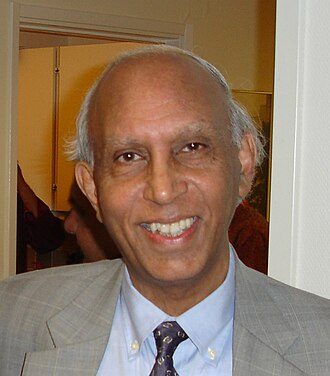
Ishtiaq Ahmed
Pakistani-Swedish political scientist whose study of the 1947 violence in Punjab rests on interviews with survivors of all three communities and on secret British reports.
Ishtiaq Ahmed is a Pakistani-Swedish political scientist and the author of The Punjab Bloodied, Partitioned and Cleansed, a history of the violence of 1947 in Punjab. He was born in Lahore on 24 February 1947 and took a PhD in political science at Stockholm University in 1986. He taught at Stockholm from 1987 to 2007, where he is Professor Emeritus, and later held research posts at the Institute of South Asian Studies at the National University of Singapore, besides visiting posts in Lahore (Wikipedia).
The book. Its full title is The Punjab Bloodied, Partitioned and Cleansed: Unravelling the 1947 Tragedy through Secret British Reports and First-Person Accounts. Rupa published it in India in 2011 and Oxford University Press in Pakistan in 2012. Reviewers describe about fifteen years of research, with more than 200 interviews with survivors in both Punjabs, mainly in the 1990s and early 2000s (Pran Nevile in The Statesman), set beside British official reports such as the Governors' fortnightly reports (Ajay Bharadwaj on Kafila). The narrative runs from the second half of 1945 to December 1947.
Its argument. Himadri Banerjee, reviewing it in the Journal of History, writes that Ahmed treats the Partition of Punjab essentially as ethnic cleansing, following the view that state functionaries used their power to remove people seen as alien, and that he faults leading figures of all three communities for abetting the crisis. Bharadwaj writes that he moves beyond a victim-versus-perpetrator story and shows Punjabis of all communities as both. Nevile's review notes that the book records Hindu and Sikh refugees' accounts of violence and organised violence against Muslims in East Punjab's princely states, and gives the scale as 9 to 10 million people uprooted and about a million dead.
Reception. Mahir Ali in Dawn called it "meticulously researched" and an invaluable oral history, while noting that it explores class resentment too little. The book won the Best Non-Fiction Book Award at the Karachi and Lahore literary festivals in 2013 (Wikipedia). Ahmed has also written on Pakistan and on Jinnah; in his 2020 book he argues that Jinnah consistently held that Hindus and Muslims could not form one nation, and that scholars who absolve Jinnah of responsibility for Partition are selective (Wikipedia).
Key moments
- 1986: PhD, Stockholm University.
- Early 1990s: begins the survivor interviews (from 1992, per Banerjee).
- 2011 and 2012: the book appears in India and Pakistan.
- 2013: wins the Karachi and Lahore literature festival awards.
Sources
- Ishtiaq Ahmed (political scientist), Wikipedia. en.wikipedia.org
- Review of The Punjab Bloodied, Partitioned and Cleansed by Pran Nevile, The Statesman, reprinted by the Academy of the Punjab in North America. apnaorg.com
- An undivided history of Punjab's Partition, review by Ajay Bharadwaj, Kafila. kafila.online
- Reviewing The Punjab Bloodied, Partitioned and Cleansed, by Himadri Banerjee, Journal of History, republished by aikRozan. aikrozan.com
- Blood on the Tracks of History, review by Mahir Ali, Dawn. dawn.com